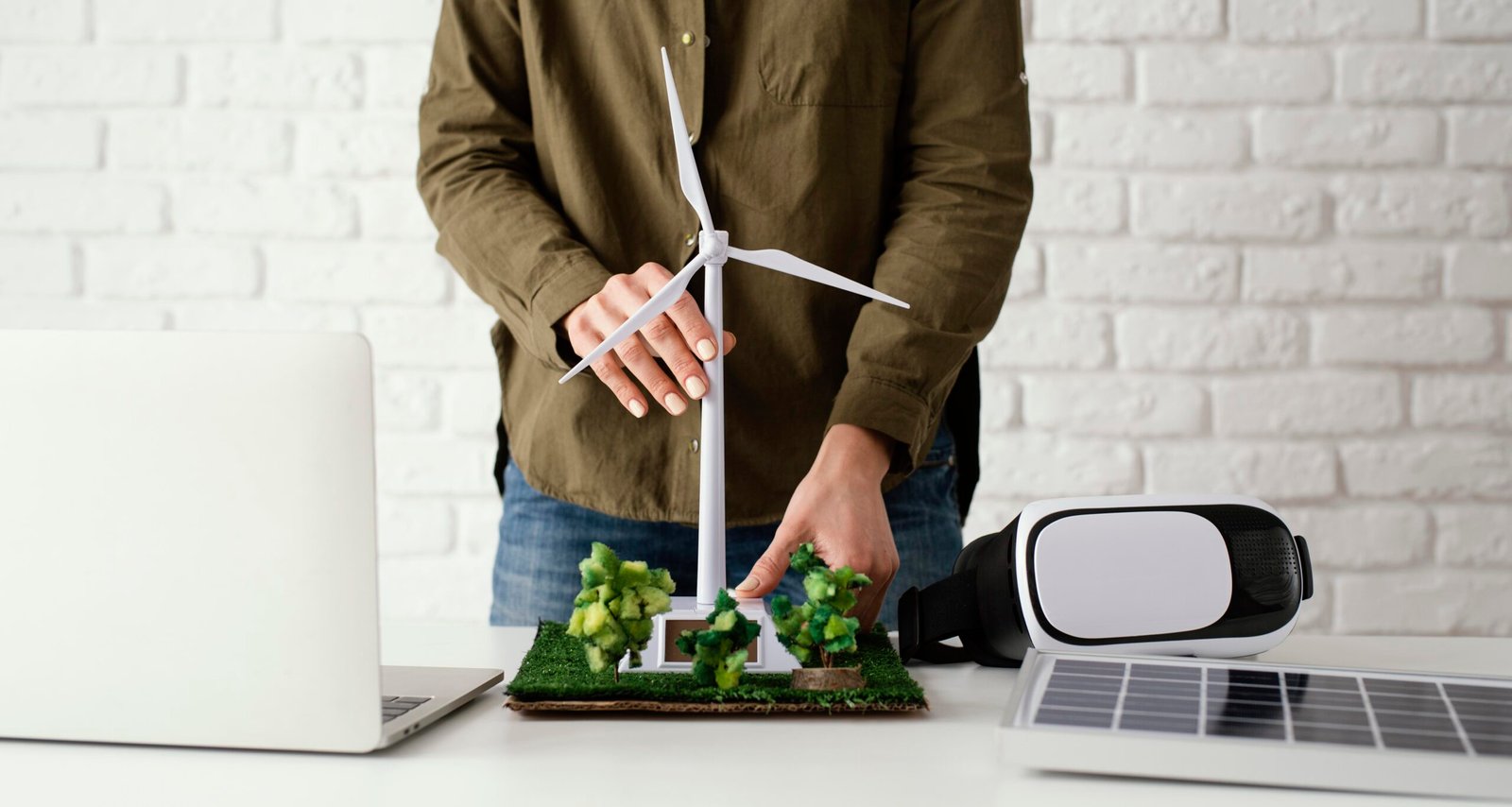

Sustainable living is especially important nowadays, as environmental concerns are also increasing. Modern technology has made turning green easier and realistic. Solar panels, wind energy, and smart home systems, amongst other tools, contribute to the reduction in the use of energy, lower bills, and waste, making the environmentally friendly choice not only a smart but also an economical one.
This blog discusses how greener living can be facilitated by sustainable tech. Whether it is saving energy and water in the home, using environmentally sensitive materials, or food production, you can find tips on how this might be done through real statistics that prove how beneficial it can be. Once you have begun with some minor change or started with a serious transformation, this guide will support you in living smarter and caring about the planet.
Renewable Energy Solutions
Below are three key renewable energy solutions to consider.
Solar Panels
The solar panels convert sunlight to electricity. They reduce fossil fuel dependency. Using solar power does not produce any emissions. The panels are installed in sunny areas, although even in cloudy places, they are helpful. Many houses have installed solar panels on the roof. Whole populations are powered by solar farms.
By 2024, solar power sources will consume more than 6.9 percent of global energy and have more than 1,600 GW of their installed base. Utility-scale solar has dropped more than 85 percent in cost since 2010, and most countries provide net metering and subsidies. Due to this, most homeowners can save a lot of money in terms of bills and sell excess to the grid. The length of repayments has considerably decreased, with the average in a given location spanning 3-10 years.

Wind Turbines
Wind turbines harness wind power and transform it into electric power. They go as large as wind farms as well as small home turbines . Some countries generate more than half of their energy using wind. Wind farms located offshore harness the unending movement of sea breezes. Wind energy can be harvested, is green, and available in different sizes. It reduces the use of coal and gas stations.
In 2024, worldwide wind and solar made 96.6 percent of new renewable capacity; 25 percent with wind. Onshore wind has experienced a reduction in cost of 70 percent since the year 2009, which has made it one of the cheapest sources of energy.

Buy on Amazon
Geothermal and Hydropower
Geothermal energy converts heat from within the Earth to usable energy. It delivers low-emission heat, cooling, and electricity. Hydropower utilizes flowing water from rivers or dams, and a turbine is then driven by it to produce electricity. These resources are reliable, steady, and ideal for baseload power.
Globally, to generate electricity, hydropower represents ~16%, making it the largest of the renewable energy sources. Geothermal is around 0.4%, the output is steady, and emissions drop.
Buy on Amazon
Energy-Efficient Appliances
Here are the energy-efficient appliances:
ENERGY STAR Rated Products
Products that consume less energy are labeled as ENERGY STAR-like refrigerators, washing machines, and dishwashers. They use 20 and 30 percent less electricity and water than the traditional models do. Purchasing new machinery will decrease your carbon footprint and save money. Numerous governments will give a reimbursement to promote upgrades.
Smart Appliances and Induction Cooking
Smart appliances come with Wi-Fi and apps so that you can monitor and manage the use of energy. Cooktops in induction Cooktops. The cooker contains magnetic fields to heat pots directly. They use less energy than gas or electric coils and cook faster, more safely. Connected fridges even present the ability to notify homeowners when doors will be open, and wasted energy could be minimized.

LED bulbs consume not more than 80 percent of the energy used by incandescent bulbs, and their lifespan is up to 25 times longer. They have a low amount of heat production, minimizing the demand for cooling, particularly during the hot season. Smart LED systems may intentionally show up the brightness depending on daylight or assess the occupancy of the room, utilising even more electricity.
Buy on Amazon
Smart Home and Energy Management
Smart Thermostats
Smart thermostats, including Nest and Ecobee, learn your schedule and switch heating or cooling to conserve energy. As an example, they lower the heating when there is no one at home. They are operated by mobile applications.
It has been established that smart thermostats reduce up to 10 to 15 percent energy used on heating or cooling annually. Users have saved on gas heating 10% of their expenses and 17.5% when cooling their homes using electricity using the Nest Thermostat.
Smart Plugs & Power Metering
Smart plugs monitor how much energy is used by the connected devices. They identify wastes in terms of energy that electronics consume when plugged in, yet no work is being carried out. Smart plugs can be turned off remotely to avoid waste. Energy monitors provide a breakdown of the power consumed at home, thus helping to discover power-guzzling appliances.

The consumption of electricity was reduced by 4-15 percent on average by home energy displays in some studies, with individual pilot programs averaging a 6.5 percent reduction.
Buy on Amazon
Home Energy Management Systems (HEMS)
HEMS links solar panels, batteries, smart devices, and software to control home energy. As an illustration, they operate dishwashers in the middle of the day when the solar energy is at its maximum. HEMS lessens the grid reliance and enhances energy efficiency. Others are also taken to the demand response programmes, which maintain the larger electrical grid.
Water Conservation Technologies
The following are strategies for conserving water.
Rainwater Harvesting
Water is gathered on the rooftops, which are then stored in tanks. Such water can be utilized as garden water, in toilets, or to cleanse. It eases the burden on city resources. Rainwater harvesting also reduces stormwater runoff and erosion. Some systems are designed with filters to enable a person to use rainwater indoors.
More than 34,000 rainwater systems were installed by 2025 in the state of Uttar Pradesh, India, as a part of reaching 235,000 total by that year.
Drip Irrigation and Smart
Smart irrigation systems can prevent overwatering with the help of sensors and weather forecasts. The effectiveness of drip irrigation is that water is delivered to the roots of the plants directly, limiting evaporation and runoffs. The two approaches save water and lead to healthier plant growth.
Greywater Recycling
Greywater can be used as water in sinks, showers, and washing machines that are accessible to reuse either to flush toilets or to irrigate landscapes. Filters purify the contaminants, and the water becomes usable again. This greatly reduces the demand for freshwater.
The reuse of grey water in certain places lowers water usage in households by half. Daily consumption can be reduced to less than 80 litres/per person when combined with rainwater harvesting, compared to more than 140 L/day average in places such as the UK.
Low-Flow Fixtures
Showerheads, toilets, and faucets can have lower water-consuming capabilities without a compromise to performance. New low-flow toilets preserve 1.28 gallons or less per flush as opposed to the older systems that used up to 7 gallons. These minor renovations save water and lower bills.
Sustainable Building Materials & Green Infrastructure
Here are a few eco-friendly construction materials and systems that promote sustainability.
Bio-Based and Recycled Materials
Eco-conscious builders utilize waste such as paper, clothing items, and food leftovers and reprocess them into building materials. They can be converted to insulation panels or acoustic boards. Recycled materials save virgin resources and waste material in landfills. It also reduces the energy consumption in production.
Natural material
Timber, straw bale and cork are renewable and sustainable building materials. They give very good insulation and have low embodied carbon. The straw bales have good thermal properties in that the walls are thick and natural. Cork is very light, fireproof, and proof against noise. The indoor air quality is enhanced using natural materials, and the emissions of the building construction are also reduced.
Green Roof/Living Green Infrastructure
Vegetation covers the green roofs. They make the insulating of buildings, the minimization of urban heat islands, and rainwater absorption possible. Intra-urban birds (and pollinators) find a home on green roofs. Infrastructures such as constructed wetlands serve as living features of infrastructure to clean the stormwater and sustain biodiversity. These strategies assist urban areas in dealing with climatic problems.

Biomimicry and Biodesign
Biodesign involves the use of living materials or bio in building. As an example, mycelium bricks grown out of fungi are lightweight, do not burn, and are biodegradable. The things that can be seen in biomimicry design are imitations of the efficient structures found in nature, like passive cooling in buildings using termites. The approaches reduce the effects imposed on the environment and encourage innovations.
Agriculture and Composting Technologies
Below are some key technologies used in agriculture and composting.
Composting and Bioplastics
Composting organic waste allows it to provide fertilizer. It omits methane emissions from landfills and maintains soil health. Bioplastics are derived from either corn, sugarcane, or algae and are biodegradable. They also provide substitutes to traditional plastics, reducing pollution.
Aquaponics, Vertical Farming, Permaculture
Vertical farming cultivates crops in stacked layers vertically and can conserve land as well as water. Containments limit the levels of pesticides. Aquaponics is used in combination with fish culture and hydroponic growth of plants using nutrient recycling. The formats that are applied to permaculture resemble natural ecosystems to come up with a sustainable, productive landscape. The approaches result in local food security and biodiversity.
Smart Eco-Gadgets for Daily Use
Solar Chargers and Reusable Batteries
Phones and small devices are powered using sunlight with the use of solar chargers. They lessen the need for grid electricity. Renewable batteries have many charges to spare, which reduces toxic waste. The two devices facilitate daily ecological initiatives and lower carbon footprints.

Smart Recycling and Composting Tech
Smart capacitors accelerate the decomposition of organic waste in a prolonged environment. The automated recycling bins can sort materials, and this lessens the chances of contamination. Such technologies enhance better handling of waste and enable communities to recycle effectively.
How to Implement Eco-Friendly Tech at Home
- Be keen on your electricity and water consumption.
- Begin with low-cost investments such as LED bulbs and low-flow fittings.
- Install smart thermostats, irrigation systems, or power monitors.
- Alex, there are solar panels or battery storage you can install.
- Utilize composting bins and bioplastics as well as sustainable building materials.
- Choose to support local green companies and innovations aimed at climate solutions.
Conclusion
Green technology can provide tested methods of sustainable living. They conserve energy, water, reduce pollution, and save money. Such innovations enhance wellness, comfort, and prosperity. It does not matter whether one wants to begin small or bridge their investments on advanced systems; one can contribute to a greener future. This is something that we can help change homes, neighborhoods, and cities to be cleaner and healthier.
FAQs
1. What renewable energy source works best at home?
The most popular of these are solar panels, and the second in windy regions are wind turbines. Geothermal energy and hydropower operate at a certain site. Solar and battery systems are renowned for being reliable.
2. How much do these systems cost and save?
Solar systems cost varies, but subsidies and net metering help. Payback is usually within 3–10 years, with big savings on energy bills.
3. Do eco-tech systems need a lot of maintenance?
Not much. Solar panels require some periodic cleaning. Intelligent devices and products are easy to maintain. Wind turbines require a routine inspection.
4. Do smart home devices save energy and money?
Yes. LEDs, efficient appliances, and smart thermostats would reduce energy consumption by 10 to 30 percent, reducing bills.
5. How can I save water at home with tech?
Reduce water consumption and expenses by using rainwater gathering, brilliant/drip irrigation, greywater reuse, and low-flow fixtures.